The movement is the
world beyond it.



Smile Up at the Sky is an uplifting, feel-good anthem about the small but meaningful decision to welcome joy into an ordinary day. Built around bright acoustic guitars, a Motown-inspired bassline, playful piano, handclaps, brass accents, and an infectious live-band groove, the song captures the warmth and spontaneity of people coming together through music.
The opening verse begins with a simple gesture: throwing open the curtains and stepping into the morning. It represents a shift in attention, away from the weight of yesterday and towards the possibilities of the present. The song doesn't suggest that life's difficulties have disappeared. Instead, it explores what happens when we give ourselves permission to experience something good alongside them.
As the music unfolds, that personal shift becomes something shared. A wave to a stranger, a smile returned, a rhythm picked up by another person—these everyday encounters create a growing sense of connection. Happiness becomes less about finding perfect circumstances and more about participating in the world around us.
Musically, Smile Up at the Sky draws on the communal warmth of classic soul, the rhythmic openness of worldbeat, and the easy optimism of folk-influenced pop rock. Its 110 BPM groove, bright guitar solo, and singalong chorus give it the atmosphere of an outdoor summer celebration, where the distinction between performers and audience begins to disappear.
Within The Invisible Matters (TIM), the song offers a lighter expression of an important idea: our attention influences how we experience the world, and the way we participate can influence the experiences of others. A smile cannot resolve every difficulty, but it can open the possibility of an encounter. A shared rhythm can turn strangers into temporary companions.
The song's optimism is therefore an invitation rather than a demand. It doesn't require us to be happy, deny difficult feelings, or pretend everything is wonderful. It simply makes room for joy when joy is available.
At its heart, Smile Up at the Sky celebrates an ordinary human capacity that can be easily overlooked: the ability to brighten a moment, share it with someone else, and carry a little of that warmth into whatever comes next.
**(Verse 1)**
Woke up this morning, threw the curtains wide
Left all the shadows and the worries inside
No use in heavy hearts, no use in the rain
We're letting go of the stress and the pain
Got a brand new rhythm skipping down the street
Feel the sunny pavement warming up your feet
**(Chorus)**
So smile up at the sky, let the worries fade away
We’re gonna catch a little sunshine today
Sing it out loud, let the music take flight
Everybody dance in the golden light
Oh, smile up at the sky!
**(Verse 2)**
Turn down the noise, turn the radio high
Watch the cotton-candy clouds rolling by
Give a little wave to a stranger passing through
Before you know it, they'll be smiling back at you
It’s a beautiful world when you look at it right
Everything is sparkling, everything is bright
**(Chorus)**
So smile up at the sky, let the worries fade away
We’re gonna catch a little sunshine today
Sing it out loud, let the music take flight
Everybody dance in the golden light
Oh, smile up at the sky!
**(Bridge)**
Step-clap, step-clap, feel the beat move
Nothing in the world's gonna ruin this groove
Just look on up, see the endless blue
There's a happy-go-lucky day waiting for you!
**(Guitar Solo - Upbeat and Bright)**
**(Chorus)**
So smile up at the sky, let the worries fade away
We’re gonna catch a little sunshine today
Sing it out loud, let the music take flight
Everybody dance in the golden light
Oh, smile up at the sky!
**(Outro)**
Yeah, just smile up at the sky...
Keep your chin up high...
Sing it one more time...
Smile up at the sky!
Key Themes
Joy • Optimism • Human Connection • Letting Go • Shared Happiness • Presence • Celebration • Everyday Encounters • Music as Connection • Emotional Freedom • Spontaneity • Community • Hope • Participation • Choosing Light
TIM connection: Joy as participation rather than obligation. Connection through small encounters. Making room for light without denying the shadows.


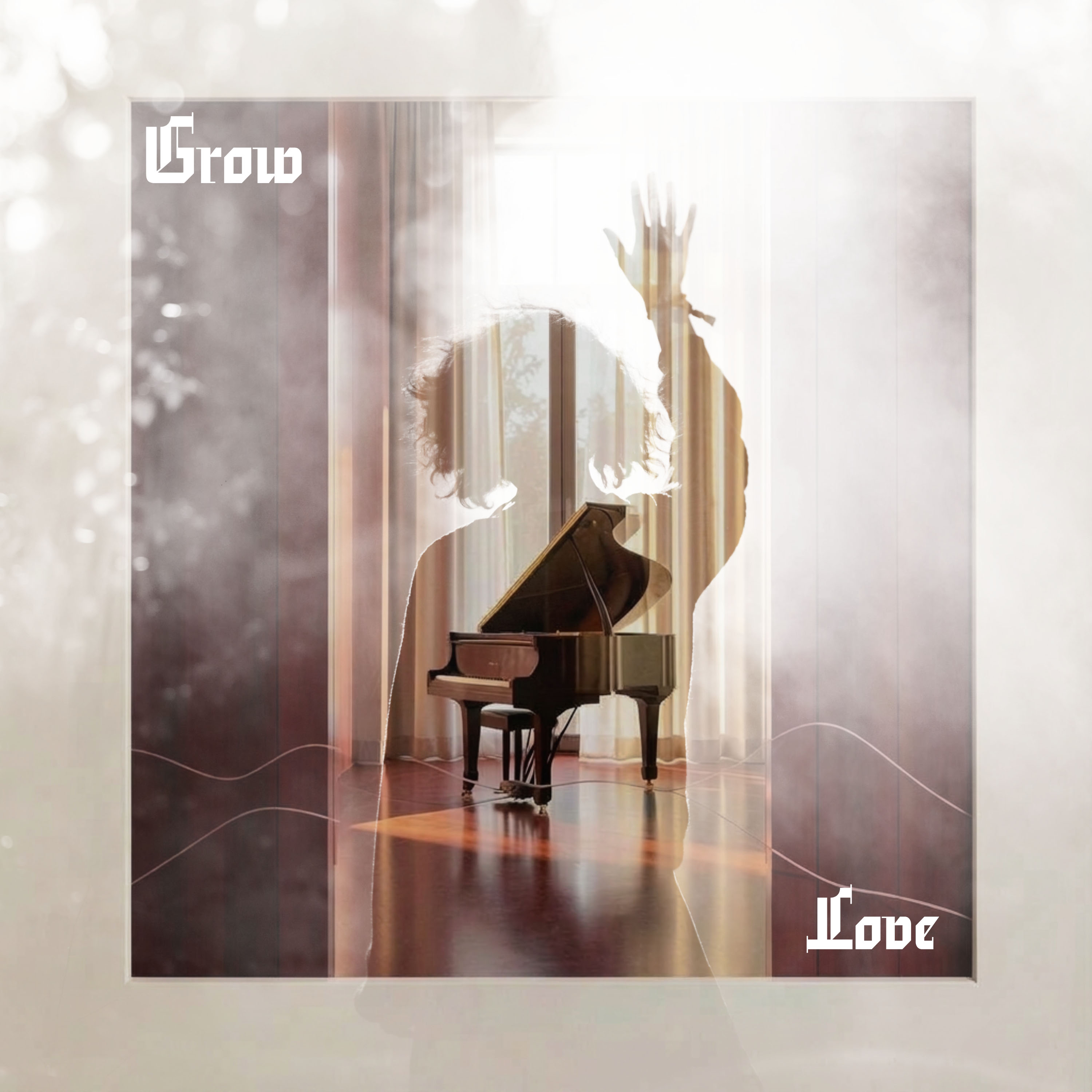
Grow Love explores the relationship between movement, memory and recognition through an intimate conversation between voice and piano.
At the heart of the composition is a musical relationship: the left hand maintains a steady, grounding pulse while the right hand ventures into syncopation, chromatic movement and harmonic uncertainty. One provides continuity; the other explores possibility.
The piece begins with the familiar. Footsteps, hallways, windows and repeated journeys evoke the patterns through which we come to understand our lives. Yet familiarity does not necessarily mean understanding. Sometimes we inhabit a place, a relationship or even a version of ourselves long before recognising what it means.
As the piano moves through jazz-influenced harmonies, suspended chords and shifting tonal centres, the music reflects this process of exploration. The original melodic motif repeatedly moves away from its starting point, gathering new perspectives before returning.
The chorus introduces the central revelation: recognition does not always arrive through explanation, achievement or certainty. Sometimes something within us knows the way before we have the language to describe it.
The return of the original motif becomes particularly significant. It is not simply a return to where the music began. The journey has changed how we hear it.
Within The Invisible Matters, Grow Love explores an important distinction between returning to something familiar and recognising it differently. The composition suggests that growth need not involve abandoning what came before. New experiences can deepen our relationship with what has remained.
The closing moments reinforce this idea. The voice retreats, leaving the piano to complete its final phrase alone. The steady pulse continues, the harmony resolves, and the final chord is allowed to decay naturally into silence.
Nothing needs to be added.
The recognition has already occurred.
The Architecture of Recognition
Intro
(The left hand begins its steady, unhurried quarter-note chords. Grounding. Familiar. Unmoved.)
Verse 1
(The right hand begins to pull away, introducing the syncopated, wandering motif. The chromatic shifts begin to warp the space.)
The hallway learned my footsteps
Before I learned what they were for.
I kept returning to the window,
Though nothing different ever came.
I wore a path across the carpet,
Between the shadow and the frame.
Pre-Chorus
(The music pushes deeper into the jazz extensions and suspended chords. The timing leans heavily into rubato—stretching and pulling like a memory losing its edges.)
We build a house out of the movement.
We bend the thread to see it hold.
Further out into the shifting air,
Forgetting what we had been told.
Chorus
(The dynamics swell toward forte. The original motif returns with absolute clarity in the right hand, locking perfectly back into the steady left-hand pulse. The voice lands directly inside the return.)
After every borrowed language,
After every changing road,
Something in me knew the way,
Long before I called it home.
Not louder than the noise,
Not stronger than the storm,
Just waiting in the distance,
Like it had all along.
Verse 2
(The volume drops instantly back to mezzo-piano. The piano wanders again, but now the chromaticism feels less like getting lost and more like observing the landscape with new eyes.)
A muscle memory in the wing.
A quiet habit in the dark.
Fingers finding where the wood is warm,
The steady witness in the heart.
Outro
(The harmonic tension begins to dissolve. The modulations guide us gently, safely back toward the center. The music grows incredibly quiet, spacious, and completely unhurried.)
(Voice, barely a breath, landing right before the final piano phrases finish):
Oh...
(The voice stops. The piano plays the final iteration of the motif completely alone, the steady left hand keeping time until the final chord is struck, leaving it to vibrate and slowly decay into absolute, silent room tone.)
Recognition • Continuity • Growth • Memory • Familiarity • Exploration • Identity • Homecoming • Change • Presence • Musical Dialogue
Grow Love offers a musical expression of one of TIM's central principles: a new encounter can change our understanding without erasing what came before.
The recurring motif remains recognisable throughout the composition, but its meaning changes through context.
The piece also illustrates how recognition differs from possession. Returning to something familiar does not mean we have exhausted its meaning.
The same melody. A different encounter. Something newly recognised.

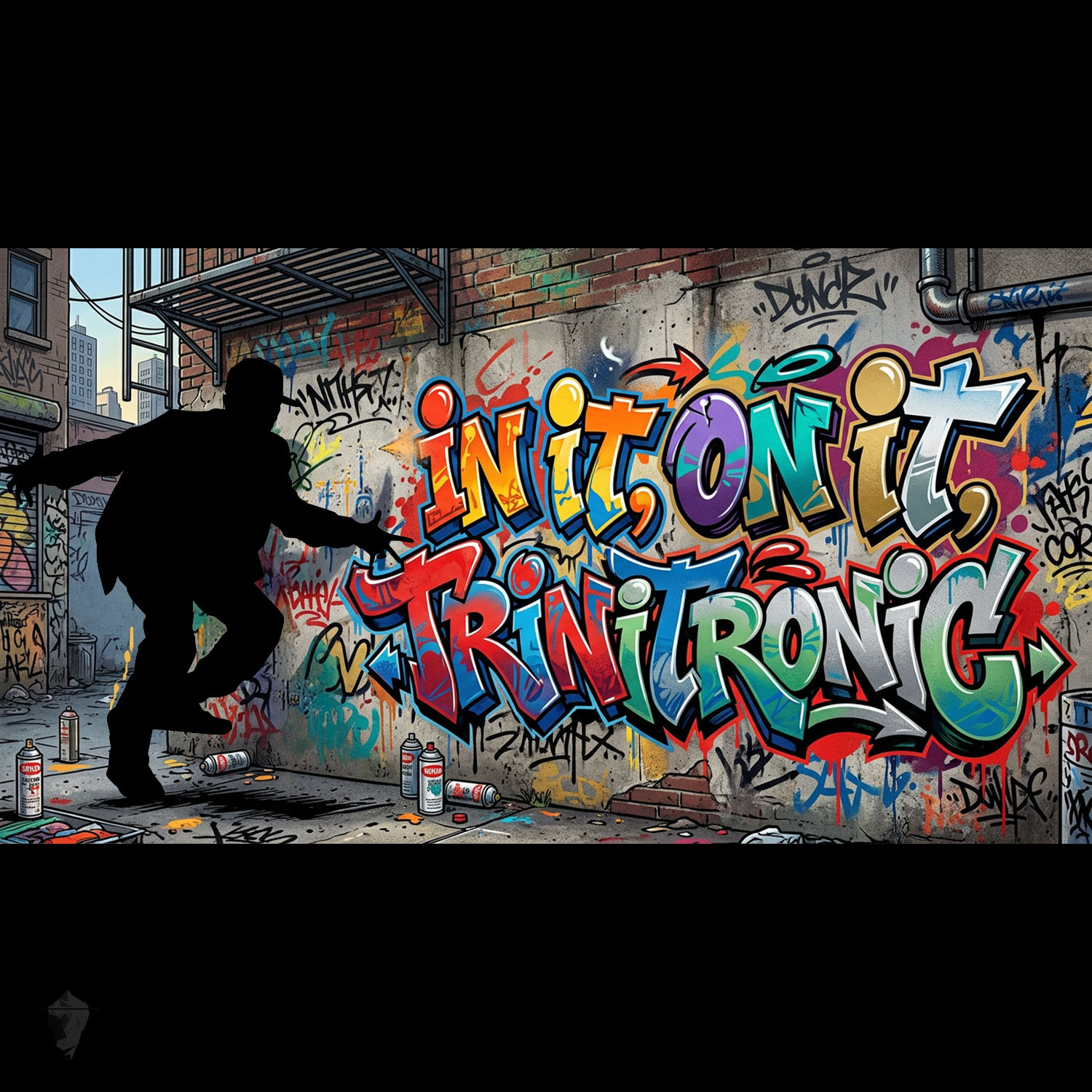
In It - On It - Trinitronic (Plug-In) explores a fundamental tension of contemporary life: we are simultaneously immersed in the world and capable of influencing it.
The phrase “In It - On It” captures two interconnected dimensions of human experience. We are in it because we inhabit systems, relationships, cultures, technologies and environments that shape our possibilities. We are on it when we recognise our capacity to respond, intervene, create and contribute.
The Trinitronic (Plug-In) version brings this relationship into an electronic musical setting. Its title evokes circuitry, connectivity and the interaction between human agency and technological systems. Rather than presenting technology as inherently liberating or oppressive, the song invites a more nuanced question: what happens when we become aware of the systems we participate in?
Within The Invisible Matters (TIM), the track expresses the distinction between participation and control. Being conscious of a system does not place us above it, nor does participation guarantee that we can determine its outcomes. Our influence is real, but it remains situated, relational and incomplete.
The movement from immersion to agency is therefore not an escape from the world. It is a deeper engagement with it.
In It - On It - Trinitronic (Plug-In) becomes an invitation to participate deliberately, remain responsive to what we encounter, and recognise that even within complex systems, our choices can leave a trace.
⚡ TRINITRONIC ⚡
[Intro]
Lead (Spoken/Hyping):
Yeah. You feel that?
Mind. Body. Spirit.
Human. Machine. Cosmos.
We are officially plugged in.
Are you ready? Let’s go!
⸻
[Hook]
All (Anthemic, bouncing rhythm):
In it, on it!
Like you Trinitronic™!
Whole world bouncing,
Human supersonic!
In it, on it!
Everybody locked in!
One world turning,
Under one sun.
⸻
[Verse 1]
Lead:
Step into the future but we keep it in the present,
Every single soul in the room is incandescent.
Past, present, future—yeah, we fuse it in the mix,
Fixing up the frequency, we got the blueprint lit.
You got the Human (Yeah!)
You got the Tech (Uh-huh!)
You got the Universe demanding its respect!
We don’t divide it, we multiply the spark,
A billion neon lights cutting straight through the dark!
⸻
[The Stadium Call-and-Response]
Lead:
When I say IN IT, you say ON IT!
Lead: IN IT!
Crowd: ON IT!
Lead: IN IT!
Crowd: ON IT!
Lead:
Now tell me how you feel!
All:
LIKE YOU TRINITRONIC!
Lead: IN IT!
Crowd: ON IT!
Lead: IN IT!
Crowd: ON IT!
Lead:
Let the bassline drop…
All:
GO SUPERSONIC!
⸻
[Chorus / Drop]
All:
In it, on it!
Like you Trinitronic™!
Whole world bouncing,
Human supersonic!
In it, on it!
Everybody locked in!
One world turning,
Under one sun.
⸻
[Outro]
Lead:
Connected.
Synced.
Tuned in.
One World. One People. Equal.
Under one sun…
Stay In It, On It.
Trinitronic.
(Echo out)
In It - On It - Trinitronic (Plug-In) can be understood as an electronic expression of one of TIM's recurring questions: What does it mean to participate consciously in a world we can never fully understand or control?
The title provides the conceptual foundation.
In It acknowledges our embeddedness in life. We are shaped by circumstances, relationships and systems that precede us.
On It introduces attention, intention and action. Although we cannot determine every outcome, we can influence how we participate.
Plug-In suggests connection and activation, while the Trinitronic identity gives the track a technological, experimental character.
The song's significance within the wider catalogue lies in its refusal to separate awareness from action. Recognising the world is only part of the process; participation introduces consequence.
TIM connection: We do not need complete knowledge of a system to participate meaningfully in it. But the limits of our understanding should also limit the authority we claim over others.
The track offers a rhythmic, playful expression of that principle: we are already in the world, and what we do within it matters.


The Invisible Matters™
