The movement is the
world beyond it.

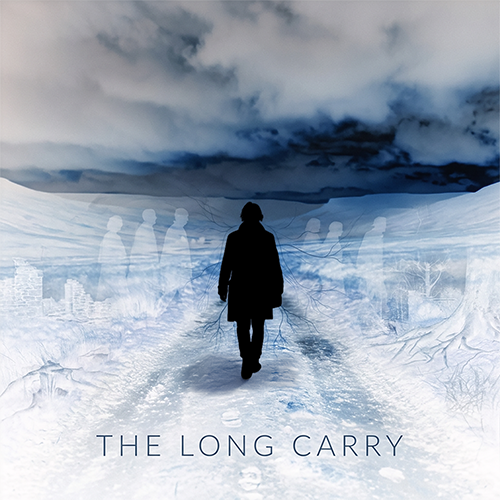

The Long Carry examines the invisible histories that shape individual lives long before conscious awareness begins. Through themes of inheritance, identity, memory, survival, and belonging, the song explores how personal experience is often influenced by forces that extend beyond any single lifetime. At its surface, the song reflects on social inequality, discrimination, historical trauma, and the unseen pressures that many people carry through everyday life. Rather than focusing solely on external events, however, it investigates how those experiences become embodied—how stories, fears, adaptations, and survival strategies can echo across generations and continue influencing behaviour long after their original causes have faded from view. Beneath its social observations lies a deeper inquiry into empathy. The song challenges simplistic assumptions about equality and sameness by suggesting that understanding another person requires more than recognizing shared biology. It requires curiosity about the unseen journeys, inherited burdens, and lived realities that shape how individuals move through the world. Within the wider TIM ecosystem, The Long Carry represents a movement from self-awareness toward relational awareness. Earlier songs focused on technology, acceleration, identity, and personal coherence. Here, the focus expands to include history, culture, ancestry, and collective memory. The song asks what becomes possible when people stop debating difference and begin listening for what others have been carrying. The title serves as both metaphor and invitation. The carry is not merely personal. It is collective. Every individual inherits stories, assumptions, wounds, strengths, and adaptations that influence how they experience life. The song proposes that compassion begins when these invisible realities are acknowledged rather than ignored. Ultimately, The Long Carry suggests that being human may not be a solitary achievement but a shared practice of understanding. The path forward is not found through erasing differences but through learning how to walk alongside one another with greater awareness of what each person brings to the journey.
(Verse 1) From watching the news Turning suffering into views Everybody talking loud But nobody breaking through I learned to brace the room Before the thunder moved Like a nervous system Calibrated to the wound I don’t wanna raise my voice Just to prove that I exist But silence has a gravity That settles in the chest And I can feel the vibrations Underneath the steel Something ancient in the body Something history can’t heal (Pre-Chorus) Maybe the ground remembers Every name it couldn’t keep Maybe we inherit storms We never got to see (Chorus) We’re all walking with a long carry Invisible weight in the blood and bone Trying to become human together While learning what was never shown You can say we’re all the same Biologically true But no one really knows the distance Another soul walked through (Verse 2) Who took from your ancestors Who taught you how to hide Who taught you being visible Could put your life aside Some people learn performing Before they learn to breathe Smiling through the pressure With earthquakes underneath And maybe “blackened” isn’t skin Maybe it’s the scar Left by generations Trying to survive the dark (Pre-Chorus) There’s a heat beneath the language A shadow in the air People call it overthinking But the body still prepares (Chorus) We’re all walking with a long carry Invisible weight in the blood and bone Trying to become human together While making peace with what we’ve known You can say we’re all the same Biologically true But no one really knows the distance Another soul walked through (Bridge / Spoken) Some inherit silence Some inherit fire Some inherit hunger That never quite retires And maybe love begins Not when we erase the difference But when we finally ask “What have you been carrying?” (Final Chorus) We’re all walking with a long carry Old vibrations moving slow Trying to return to center In a world that never slows And maybe being human Isn’t something we complete Maybe it’s learning how to walk With another person’s weight beneath our feet.
The Long Carry emerged from reflections on history, identity, discrimination, and the ways human beings inherit experiences they never directly chose. The song began with a simple observation: people often encounter one another only in the present moment, while remaining unaware of the stories, adaptations, and burdens that shaped the path leading there. Rather than focusing on blame or division, the song seeks to create space for understanding. It explores how inherited experiences—whether cultural, familial, social, or historical—can influence perception, behaviour, and emotional responses in ways that remain largely invisible. The song asks listeners to consider not only what people are carrying today, but where those burdens may have originated. Within the TIM catalogue, The Long Carry represents one of the project's clearest explorations of compassion. It extends earlier conversations about identity and belonging into a broader examination of collective memory and shared humanity. The song suggests that genuine connection begins when individuals become curious about experiences beyond their own. Its central question—"What have you been carrying?"—serves as both invitation and challenge. By asking it sincerely, the possibility of deeper understanding emerges. In this sense, the song is less concerned with solving historical wounds than with creating the conditions in which healing conversations can begin. Key Themes Empathy • Inheritance • Identity • History • Compassion • Belonging • Trauma • Resilience • Collective Memory • Understanding • Humanity • Connection


The Doorway (Someone New) explores the moment that exists between who a person has been and who they are becoming. Built around the image of standing at a threshold, the song examines the uncertainty, vulnerability, and possibility that accompany meaningful change. At its surface, the song reflects on transition. Whether entering a new phase of life, pursuing a long-held dream, embracing authenticity, or stepping into unfamiliar territory, the lyrics capture the emotional tension of standing before a future that has not yet fully arrived. The doorway becomes a symbol of both opportunity and uncertainty—a place where old identities remain visible even as new possibilities begin to emerge. Beneath its themes of change lies a deeper challenge to conventional ideas of transformation. Rather than suggesting that growth requires the construction of an entirely new identity, the song proposes that many forms of personal evolution involve uncovering aspects of the self that have been hidden, suppressed, or forgotten. Fear, expectation, social pressure, and self-protection often obscure authentic expression. The journey forward becomes less about invention and more about revelation. Within the wider TIM ecosystem, The Doorway (Someone New) represents an important movement from self-awareness toward self-occupation. Earlier songs explored acceleration, identity, inherited burdens, and emotional resilience. Here, the focus shifts toward integration. The question is no longer who we should become, but whether we are willing to fully inhabit who we already are. The recurring image of crossing a threshold reflects this insight. The future is not presented as an escape from the past but as an invitation to carry greater honesty into it. Transformation emerges not through abandoning the thread of identity, but through strengthening one's relationship to it. Ultimately, The Doorway (Someone New) suggests that becoming is not an act of replacement. It is an act of recognition. The person waiting on the other side of the doorway may not be a stranger at all.
(Verse 1) I’m standing at the doorway With my hand against the frame Everything behind me Still remembers my old name And the air feels unfamiliar Like a language I once knew Like the world is softly asking If I’m ready to break through (Pre-Chorus) But maybe every future Starts with shaking at the edge Maybe growth is just the courage To walk past who you’ve been (Chorus) I’m about to do something I have never done before Does that mean I need to become Someone I’ve never been before? Or maybe there’s a version of me Buried underneath the fear Waiting for the moment I finally let him appear (Verse 2) I spent years performing safety Trying not to lose control Keeping all my contradictions Hidden somewhere in my soul But the horizon keeps on calling Like a pulse beneath the skin And every locked and guarded version Is getting harder to live in (Pre-Chorus) Maybe transformation Isn’t building something fake Maybe it’s remembering What pressure made us forsake (Chorus) I’m about to do something I have never done before Does that mean I need to become Someone I’ve never been before? Or maybe all this distance Wasn’t distance after all Just the slow uncovering Of the self beneath it all (Bridge) Not a mask Not a performance Not a stranger wearing my face Just more honest More uncovered More willing to occupy my space (Final Chorus) I’m about to do something I have never done before And maybe that’s the doorway I was always moving toward Not becoming less myself Not abandoning the thread Just finally meeting the future Without leaving who I am instead
The Doorway (Someone New) emerged from reflections on personal growth, identity, and the often-misunderstood nature of transformation. The song began with a simple question: when we step into a new chapter of life, are we becoming someone different, or are we finally allowing ourselves to become more fully who we already are? Inspired by moments of transition, risk, and self-discovery, the song explores the emotional experience of standing at a threshold. The doorway symbolises those moments when old identities no longer fit comfortably, yet the future remains uncertain. It is a space between certainty and possibility, familiarity and growth. Within the TIM catalogue, the song represents one of the clearest expressions of authentic becoming. It extends earlier themes of self-awareness, resilience, and compassion into a more personal exploration of self-acceptance. Rather than advocating reinvention, it encourages honesty. Rather than seeking perfection, it invites participation. The song's central insight is that many forms of transformation involve recovery rather than replacement. The future self is not necessarily someone new. Often, it is the self that has been waiting patiently beneath fear, performance, and adaptation all along. Key Themes Transformation • Authenticity • Identity • Growth • Courage • Self-Discovery • Integration • Vulnerability • Becoming • Hope • Presence • Self-Acceptance
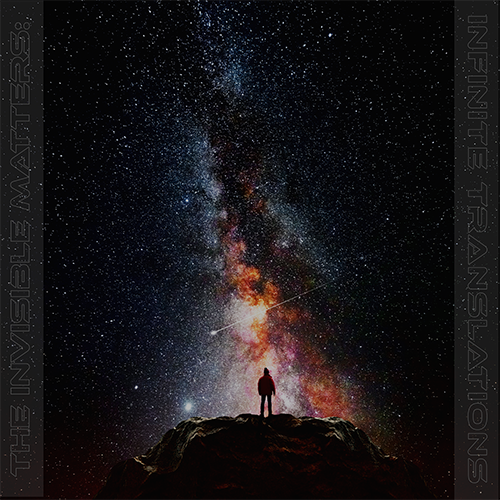
The Invisible Matters: Infinite Translations explores the possibility that humanity's greatest challenge is not brokenness but interference. Through themes of connection, attention, resonance, and shared humanity, the song examines how modern systems increasingly fragment awareness while leaving the deeper human signal intact beneath the noise. At its surface, the song reflects on digital culture, social media, algorithmic influence, and the growing commodification of human attention. The lyrics describe a world saturated with information, metrics, performance, and distraction, where individuals often struggle to distinguish genuine connection from constant transmission. The signal becomes obscured not because it has disappeared, but because it is competing with unprecedented levels of noise. Beneath its social commentary lies a more hopeful proposition. The song suggests that human beings remain fundamentally connected through experiences that transcend language, culture, geography, and identity. Music, breath, empathy, presence, and shared vulnerability become examples of a deeper resonance that continues operating beneath visible divisions. Within the wider TIM ecosystem, The Invisible Matters: Infinite Translations represents one of the clearest expressions of the project's central philosophy. It reframes many of the themes explored throughout the catalogue—acceleration, identity, belonging, embodiment, and connection—through the metaphor of signal and interference. Humanity is not portrayed as damaged beyond repair. Instead, the song proposes that people have become increasingly disconnected from their own internal frequencies and from one another. The concept of Infinite Translations emerges from this insight. Every human being expresses life differently through culture, language, experience, creativity, and perspective. Yet beneath those variations remains a shared signal. Diversity is not presented as fragmentation but as countless translations of the same underlying human experience. As both song and statement, The Invisible Matters: Infinite Translations serves as a bridge between personal transformation and collective participation. It suggests that healing may not require becoming someone else. It may simply require remembering how to listen.
[Intro] distant radio static faint electrical hum slow breathing (whispered voices overlapping) Can you hear me? …hear me… …hear me… single piano note [Verse 1] Every screen keeps pulling At the edges of my mind Everybody broadcasting But nobody feels aligned I learned to speak in metrics Translate my soul to numbers Shrink a universe of feeling Into something I could measure And somewhere in the noise I forgot my native tongue Started calling disconnection What the whole world had become [Pre-Chorus] But late at night When the silence clears I can hear a signal Underneath the fear Like a pulse Returning through the static Like a frequency Too human to erase [Chorus] We are not broken We’re just out of tune Signals in the darkness Trying to find the moon Every heart’s a receiver Every soul transmits One spark moving through us Infinite translations Ohhh… Can you feel it? The signal underneath The noise between us [Verse 2] They monetised attention Turned our nervous systems raw Built entire empires From keeping people at war Every outrage spike Every algorithm loop Pulling human beings further From the truth inside the room But I’ve seen strangers singing Like they shared the same bloodstream Seen a thousand different voices Move together through one dream And maybe that’s the answer Maybe resonance is real Maybe love is just the frequency The body knows to feel [Pre-Chorus] When the breathing synchronises When the silence starts to bend When the walls between our signals Stop pretending they’re the end [Chorus] We are not broken We’re just out of tune Signals in the darkness Trying to find the moon Every heart’s a receiver Every soul transmits One spark moving through us Infinite translations Ohhh… Can you hear it? The human sound beneath The noise between us [Bridge] music strips back to breath + low synth pulse I don’t wanna be A low-resolution version of myself I don’t wanna trade My nervous system for a feed I don’t think we’re lost I think we’re mis-tuned I think somewhere underneath All this interference… There’s still a signal Calling us home long silence deep inhale [Final Chorus – Expansive / Collective] We are not broken We’re remembering the sound One world turning Under one sun Every voice a mirror Every wound a bridge One spark moving through us Infinite translations Ohhh… Feel the resonance Humanity returning Signal to signal [Outro] crowd choir / distant harmonies / electrical hum softening into wind (whispered) Can you hear it now? …hear it now… …hear it now… heartbeat fades
Signal Integrity emerged from years of exploring questions surrounding technology, identity, connection, creativity, and human belonging. As The Invisible Matters evolved from a collection of songs into a broader philosophy, a recurring observation continued to surface: many contemporary problems appeared less like evidence of human failure and more like symptoms of interference. The song began as an attempt to articulate that distinction. Rather than portraying humanity as fundamentally broken, it explores the possibility that people have become increasingly disconnected from their own internal signals and from one another through environments designed to fragment attention and amplify division. Within the TIM catalogue, Signal Integrity functions as a synthesis point. It gathers threads from earlier songs—including Elevate the Grind, One Voice (Beyond the Dark), Evolution Revolution, Hold Your Thread, Portable Campfire, The Long Carry, and The Doorway—and reframes them through a unifying metaphor. The central challenge is not repair but reconnection. The subtitle Infinite Translations reflects the belief that human diversity is not evidence of separation but evidence of creativity. Every culture, language, story, and perspective becomes a different translation of shared human experience. The task is not to eliminate difference but to recognize the signal that moves through all of it. Key Themes Resonance • Connection • Humanity • Attention • Belonging • Translation • Identity • Consciousness • Presence • Empathy • Unity • Signal Integrity


The Invisible Matters™
.svg)